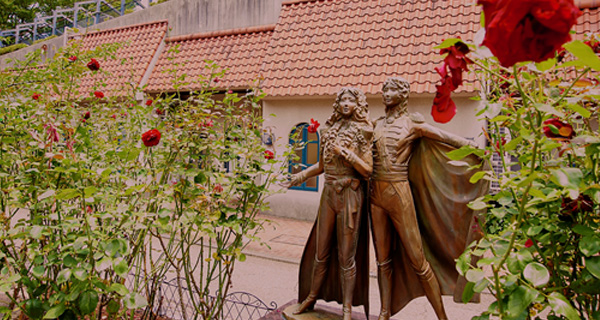
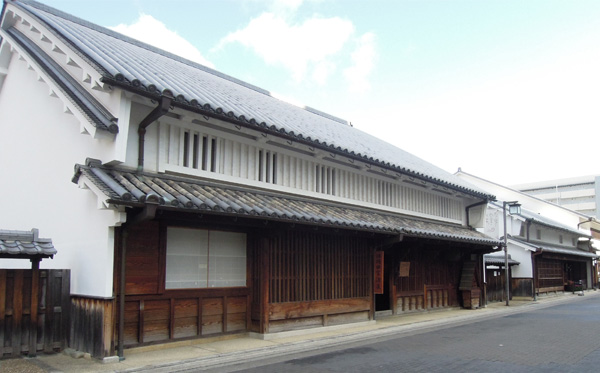
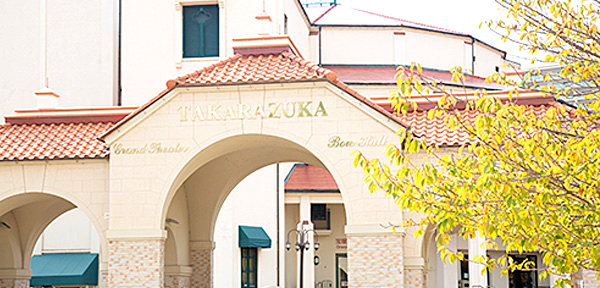
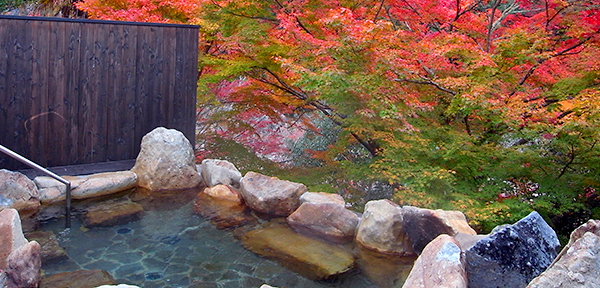
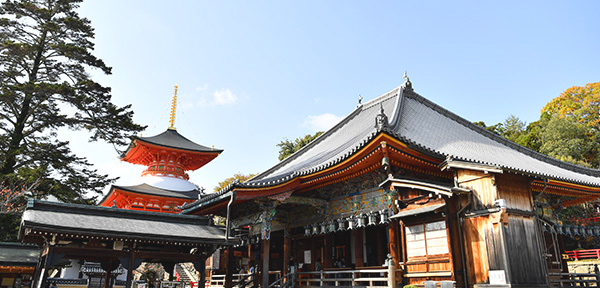
The Takarazuka Revue features the performances of all-female troupes, in contrast to traditional Kabuki, which is performed solely by men. Since its first performance in 1914, the Takarazuka Revue Company has staged musical extravaganzas to the utter delight of its numerous and dedicated fans. It is composed of five distinct troupes of about 450 performers in total ? Flower, Moon, Snow, Star, and Cosmos. |
![]() ![]() |
|---|---|
| Takarazuka Grand Theater ・1-1-57 Sakaemachi, Takarazuka ・10min. walk from Hankyu / JR Takarazuka Stns. ・http://kageki.hankyu.co.jp/english/index.html (English) |
Osamu Tezuka, representative Japanese manga artist, lived in Takarazuka from the age of 5 to 24, a period of special artistic sensitivity. He has said that he attended performances of the Revue as a youngster. His love of nature, and his belief in the sanctity of life can be directly connected to the years he spent in Takarazuka growing up. At the Osamu Tezuka Manga Museum, visitors can experience both his visual works and his philosophy. |
![]() ![]() |
|---|---|
| Osamu Tezuka Manga Museum ・7-65, Mukogawa-cho, Takarazuka ・10min. walk from Hankyu / JR Takarazuka Stns. ・http://tezukaosamu.net/en/museum/index.html (English) |
Popularly called “Kojin-san,” this temple is dedicated to the god of the hearth and the god of fire. Thus, various sized fire-handling chopsticks are donated here. |
![]() |
|---|---|
| Kiyoshi-kojin Seichoji Temple ・1 Kiyoshi Maitani, Takarazuka ・15min.walk from Hankyu Kiyoshi-kojin Stn. ・http://www.kiyoshikojin.or.jp/en/ (English) |
Sometimes delicate, sometimes fearful, Tomioka Tessai is a giant of modern Japanese painting, who is esteemed around the world. This museum holds over one thousand pieces of Tessai’s art. |
![]() |
|---|---|
| Tessai Museum ・1 Kiyoshi Maitani, Takarazuka ・20min.walk from Hankyu Kiyoshi-kojin Stn. ・http://www.kiyoshikojin.or.jp/en/tessai/ (English) |
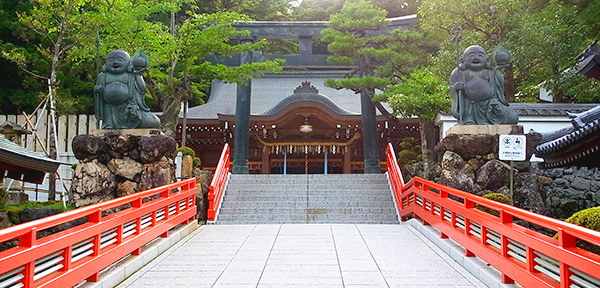
This temple is known as a place to pray for an easy birth. It was built by Shotoku Taishi. Destroyed by fire several times, the current building was reconstructed by Toyotomi Hideyori. |
![]() |
|---|---|
| Nakayamadera Temple ・2-11-1 Nakayamadera, Takarazuka ・1min. walk from Hankyu Nakayama Stn. ・http://www.nakayamadera.or.jp/top.html(Japanese) |
The history of the Takarazuka Spa goes back to the Kamakura Period. The spa, while located in the middle of downtown Takarazuka is a quiet retreat. Located on the banks of the Muko River, it is also possible for visitors to view the surrounding mountains. Occupying one section of the spa grounds is “Nature Spa Takarazuka.” It is popular as a spa resort combining beauty care, body care and gourmet dining. |
![]() |
|---|---|
| Takarazuka Spa ・Yumoto-cho, Takarazuka ・5min. walk from Hankyu / JR Takarazuka Stns. ・Nature Spa Takarazuka : http://www.naturespa-takarazuka.jp/ (Japanese) Hotel Wakamizu : http://www.h-wakamizu.com/english/index.html (English) Takarazuka Washington Hotel : http://takarazuka-wh.com/ (Japanese) |
The history of Takedao Spa goes back to the Edo Era. It is said that in the Kan’ei years (first half of the 17th century) a former fugitive warrior of the Toyotomi Clan named Takedao Naozo discovered the spa while working as a woodsman. |
![]() |
|---|---|
| Takedao Spa ・Tamase, Takarazuka ・5min. walk from JR Takedao Stn. ・Kouyoukan Bettei Azare : http://www.takedao-onsen.jp/index.html (Japanese) Maruki Ryokan : http://www.marukiryokan.jp/ (Japanese) Kajikasou : http://www.eurus.dti.ne.jp/~ss0110/ (Japanese) Motoyu : http://motoyu.main.jp/ (Japanese) |
The home of mountain cherry trees, this is an experimental grove started by Prof. Shintaro Sasabe who devoted his life to the preservation of these trees that date back to ancient Japan. In April, 1999, Sakura no Sono was opened as a nature park and is now an attractive, light hiking course. |
![]() |
|---|---|
| Sakura no Sono ・Nagaoyama Kirihata,Takarazuka ・10min. walk from JR Takedao Stn. |
The history of golf in Takarazuka can be traced back to the early 20th century in the Taisho Era. Even today, because they are situated conveniently near urban and suburban areas, courses within the city number 10, each rich in varied terrain. |
One of the 5 classic races in the country, the Oka-sho, or “Cherry Blossom Cup” held in April marks the opening of the season and is a magnet for horse racing fans. In June is the grand prix race, the Takarazuka Kinen, an all-star run because the fans have chosen the horses. All of the most popular horses compete together. |
![]() |
|---|---|
| JRA Hanshin Race Course ・1-1 Komano-cho,Takarazuka ・5min.walk from Hankyu Nigawa Stn. ・http://www.jra.go.jp/facilities/race/hanshin/index.html (Japanese) |
The park was made to look like the English country of Surry in the 17 th Century. Some gardening shop and a restaurant are inside. |
![]() |
|---|---|
| Ai-Ai Park ・2-2-1 Yamamoto Higashi,Takarazuka ・5min.walk from Hankyu Yamamoto Stn. ・http://www.aiaipark.co.jp/ (Japanese) |
Visitors are able to enjoy the beauty and bounty of nature while gathering such culinary delights as chestnuts, potatoes and strawberries. Also you can enjoy bird watching or walking in the woods to connect with nature. |
![]() |
|---|---|
| ・Around Nishitani Area,Takarazuka |
The Yamamoto gardening area, well - known throughout the country, is home to the Nagatani Peony Garden. Peonies cultivated in Takarazuka are distributed and sold throughout Japan. |
![]() |
|---|---|
| Nagatani Peony Garden ・29 Monbata Nagatani,Takarazuka ・15min.walk from Nagatani Kominkan Mae bus stop ・http://www.nagatani-btn.com/ (Japanese) |
Kyoto is famous for the richness of its culture treasures, including an impressive number of temples and shrines on the list of the World Heritage sites. With a history stretching back 1,200 year, it is a city of fascinating contrasts between old and new. In entraining, known as maiko, can be seen walking streets lined with traditional kyomachiya townhouses. Unique Kyoto cuisine, such as yudofu (tofu hot pot) and traditional kaiseki multicourse meals, is another attraction. |
![]() |
|---|---|
| URL: http://www.kyoto.travel/ |
Historically known as the "city of water", Osaka boasts a unique history and culture. During the Edo Period (1603-1868), when it developed into a center of business and trade, it came to be called the "kitchen of the nation." Since then, Osaka has been a center of food culture, and it was around this time that the phrase "kuidaore" ("eat 'till you drop") was coined. You can shop 'till you drop as well in the "Kita" (north) and "Minami" (south) shopping areas. |
![]() |
|---|---|
| URL: http://www.osaka-info.jp/en/ |
Since its harbor was opened to the ships of the world at the end of the Edo Period in 1868, Kobe has been known as a port city with a unique charm that is open to a wide range of international influences. It is the home to Japan's greatest center of sake brewing, Nada, and also boasts the natural splendor of Mt. Rokko to the north. |
![]() |
|---|---|
| URL: http://feel-kobe.jp/english/index.html |
Himeji is the second largest city in Hyogo Prefecture, after Kobe. It was built around the splendid Himeji Castle, which is listed as a World Heritage site. |
![]() |
|---|---|
| URL: http://www.himeji-kanko.jp/en/index.html |
The traditional culture of Japan can still be seen in the ancient capital Nara, home to World Heritage sites and countless assets, including Todai-ji Temple, Kofuku-ji Temple, Kasuga Taisha Grand Shrine and the surrounding Kasugayama Primeval Forest, Gango-ji Temple, Yakushi-ji Temple, Toshodai-ji Temple, and the Heijo Palace Site. |
![]() |
|---|---|
| URL: http://narashikanko.jp/en/index.html |